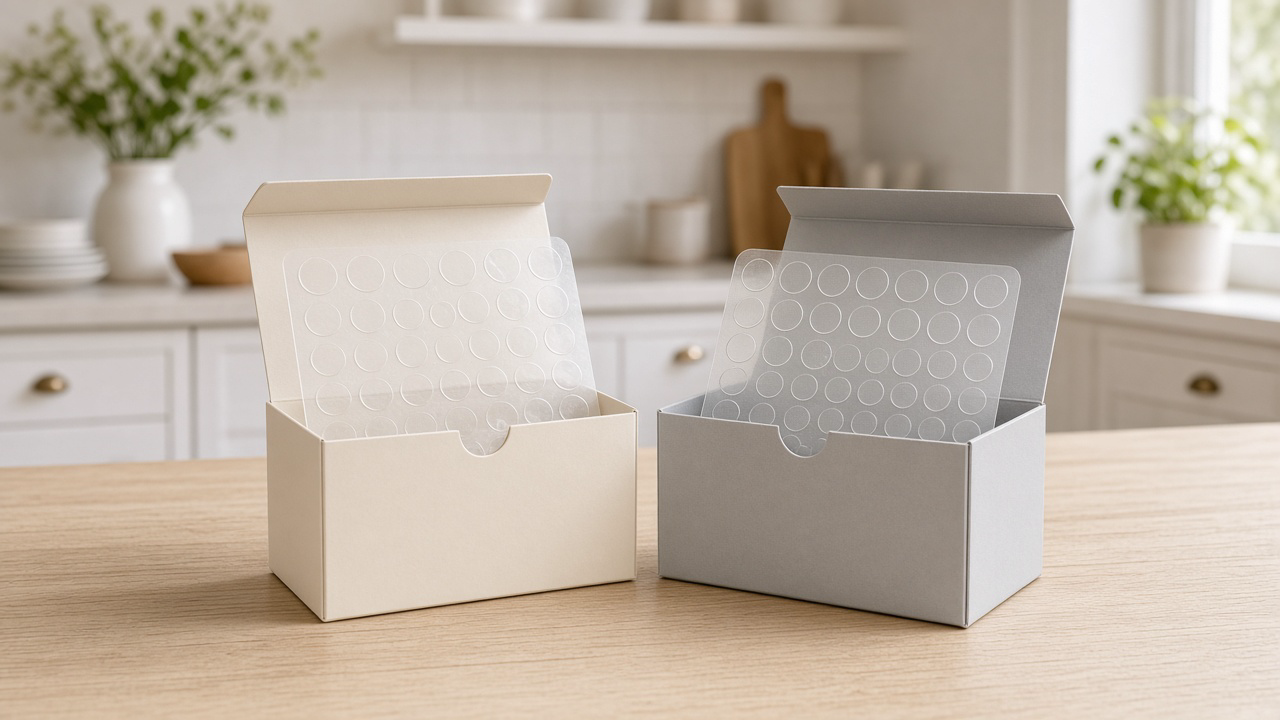
You ordered the same spot-patch name as last time, and the box looks different. Compare what you can see: the sleeve, the seller, the count, and any lot mark. You cannot tell from the kitchen table whether the discs were remade.
Hydrocolloid is the cheap round disc, roughly 15–40p a patch. It collects fluid from a whitehead, an open spot, or anything already weeping. A closed early bump is a microdart job, typically £0.60–£2.50+ a cone, so check the retailer. Anything deep, painful, cystic, or recurring needs a GP. A patch is not a cure. A different sleeve does not change that. The hydrocolloid vs microdart comparison is the format choice. This page is this box versus the last one.
Same name, different sleeve
The Amazon photo and the carton in the parcel are not always the same picture. Sleeves get reprinted. The card can change colour. A logo can move. A short line about a new look can appear on the front. That is packaging. It is not a date, and it is not proof the discs inside were changed.
Match the product name, the patch count, and whether the sheet is mixed sizes or one size. On this site, COSRX Master Patch is a 24-patch mixed-size sheet, often around £5.99, about 25p a disc. Mighty Patch Original is 36 of one everyday size, often around £10–12 for 36 on Amazon UK, or about £8.79 for 36 at Boots. If the count on the box is not the count in the title, it is a different buy. The Amazon, Boots, and Superdrug comparison is that pack match.
Listing photos can stay up after a sleeve changes. An older picture of one carton next to a newer sleeve is a packaging difference, when the name and the count still match. One photo is not a verdict. Several recent photos of a different count are a reason to stop before you pay.
The seller can change on the same page
“Sold by” and “Dispatches from” are two lines. Amazon can sell the listing, post it for another shop, or leave both to a third shop. The title can stay the same while those lines change between orders.
Note the seller on this order and on the last one. A different seller can send a newer sleeve, an older carton of the same name, or the right words with the wrong count. That line does not tell you the discs were remade. It tells you who answers if the box is not the one in the photo.
A low price is not proof the product changed. Divide the price by the patches on that listing. If it only looks lower because the count dropped, it is a different pack. A printed date, when the box has one, is covered in the expiry guide.
The condition line should say new. A used listing, or a box shown already open, is a different product. Once a hydrocolloid disc leaves the film, it is single use.
Two boxes, two lot marks
A lot code or a short mark on the flap can differ between two cartons of the same name. That is normal. A new run gets a new mark. You cannot turn those letters into a claim that the discs were remade, or into a packing month. If you write to the seller, send a photo of both marks, the seller name, and the order date.
Compare the patch count on each box, whether one sheet is mixed sizes and the other is one diameter, and any disc sizes printed on the carton. Check you are holding round hydrocolloid discs, not a microdart square. Check the film lies flat, the discs are not stuck together, and the flap is not split.
Leave unused discs on the sheet. Peeling a row to see if they feel different wastes them. One stickier night is not a change you can read across the carton. If an unworn disc is already cloudy, do not stick it on as a test.
A new sleeve with the same count, the same sizes, and a new lot code is still the pack you ordered. A new sleeve with a different count is not.
A new box does not change the job
A hydrocolloid disc still only collects fluid from the surface. It will not flatten a closed bump because the carton looks newer. A microdart cone is still for a closed early bump. Leave the rest of that pack sealed. Deep, painful, cystic, or recurring spots need a GP.
If a disc stays clear after a proper night, the usual reason is the format, not a hidden change in the carton. The unchanged-bump guide covers that morning. Colour after a real wear is in the white-centre guide.
Hold two cartons in a shop
Boots and Superdrug let you pick the box up before you pay. If two sleeves of the same name are on the shelf, compare the count, the sizes, and any line about a new look. Superdrug is the walk-in for the COSRX mixed sheet. Boots is the walk-in for Mighty Patch Original 36. Amazon UK still fits when you have noted the seller and the count matches the pack you mean.
Where to buy in the UK
For the COSRX 24-patch mixed sheet, the Amazon UK listing is COSRX Master Patch, often around £5.99. Read the seller and the count, then compare the sleeve and any lot mark with the last box. Superdrug is the other named path. Mighty Patch Original, 36 of one size, is at Boots, Hero UK, Tesco, and Amazon UK. Both packs are on where to buy hydrocolloid patches.
More notes sit in all guides. If you are still choosing a format rather than checking whether the box changed, start with hydrocolloid vs microdart.